Co-creating the future: Reflections on the first Alumni Lab convening
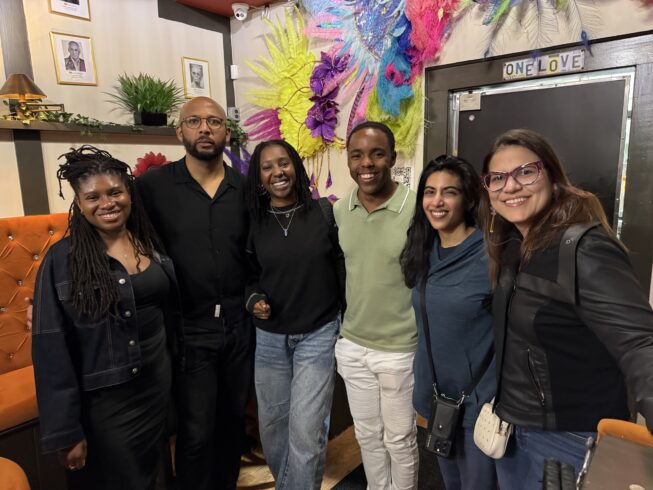
Against a backdrop of a then-emerging Middle Eastern conflict and drastic flight delays spurred by a still-ongoing, partial government shutdown, I arrived in Atlanta last month for a convening of New Profit’s inaugural Alumni Lab cohort. The challenges which these social entrepreneurs are facing are essentially the ones we all are in this period: uncertainty, fear, self-doubt, eagerness for connection.
I am now three months into a yearlong fellowship at the organization, splitting my time between the Communications and Portfolio teams. Drawing on my background, respectively, as a journalist and grants lead, I will be supporting New Profit social entrepreneurs in creating narratives, writing stories about the systems which they’re seeking to transform, and offering advisory support to portfolio team members and grant recipients.
The recently announced Alumni Lab Cohort is composed of 12 organizational leaders working across geographies and systems who have been previously supported through New Profit’s Catalyze Investments. Born in response to an urgent request for extended, active relationship with New Profit and a desire for peer networking, the Alumni Lab offers participants $50,000 of unrestricted funding and an additional year of in-person and virtual engagement, as well as strategic advice. In a period of instability, particularly for entrepreneurs working toward systemic transformation, the Alumni Lab is meant to offer a space for repair and invigoration, both individually and organizationally.
Though my role over the three-day convening held in downtown Atlanta at the Epicurean Hotel was one of observer/documentarian, I was lucky enough at times to participate and speak one-on-one with the Alumni Lab participants. What struck me the most was how the program began and ended: with a degree of love and vulnerability that I haven’t often seen in professional workspaces. Whether commiserating over travel adventures to the city, talking about and sharing images of kids, or simply enjoying prolonged hugs and laughter, these were people who openly respected each other.
Prior to my fellowship, I didn’t realize the extent to which New Profit holds regular in-person convenings for its Catalyze cohorts throughout the year. These gatherings are meant to introduce social entrepreneurs to relevant thought leaders and experts in funding and development, measurement and evaluation, leadership growth, organizational capacity building, and strategic planning.
This occasion for this cohort meeting was to co-design its agenda for the year, identify key goals and resources being sought by consensus, and nurture greater proximity across systems and sectors within it. I knew the experience was going to be a little different from what I was used to from gatherings of this type when I saw that morning chair massages, yoga and a “sound bath” were on the agenda! The Alumni Lab convening in Atlanta was curated by New Profit Partner Kathryn Peters and Manager Shiko Rugene, with support from Partner christian perry and Manager Kim Willette, all of whom I’d only met a week or so before during an all-staff retreat.
Its design strategically emphasized care and an experiential journey meant to support leaders with learnings and practical tools in navigating individual “burnout” or trauma, but also as peer guides for each other. That first day, entrepreneurs were paired after breakfast to share what they considered to be “stories of love” as a way of building interpersonal connection and common ground among them, then being brought together in a circle to discuss items they carried grounding them in the present. I couldn’t help but think about the seminal Vietnam War novel Tim O’Brien’s The Things They Carried, when I heard the prompt. Images of parents, jewelry, rocks or shells, books, and clothing were recurring. Such was the tone of inclusion to my inner shock I was compelled to display my most vulnerable baggage, the scar running from my armpit to my elbow, a reminder from a time of painful kidney dialysis.
Then-CEO, now-Proximity Fellow Tulaine Montgomery, joined the group for an emotionally resonant fireside chat with Shiko Rugene on our first afternoon together. In addition to providing context for how the Alumni Lab was iterated to meet this moment of broad social division and violence, Montgomery also issued deeply personal charges to the leaders, some of whom were vocal in sharing the painful burdens they were holding.
“Why an Alumni Lab at this stage?” Montgomery posed to the group, rhetorically. “The work which is happening and will happen in this room began in 2018. We have been striving to move money faster [to social entrepreneurs], especially in a moment [like] the one we’re in now. The system(s) which you, [and] we are trying to change cannot be the source of your affirmation. It must be nurtured, held and come from within, [between] each other.”
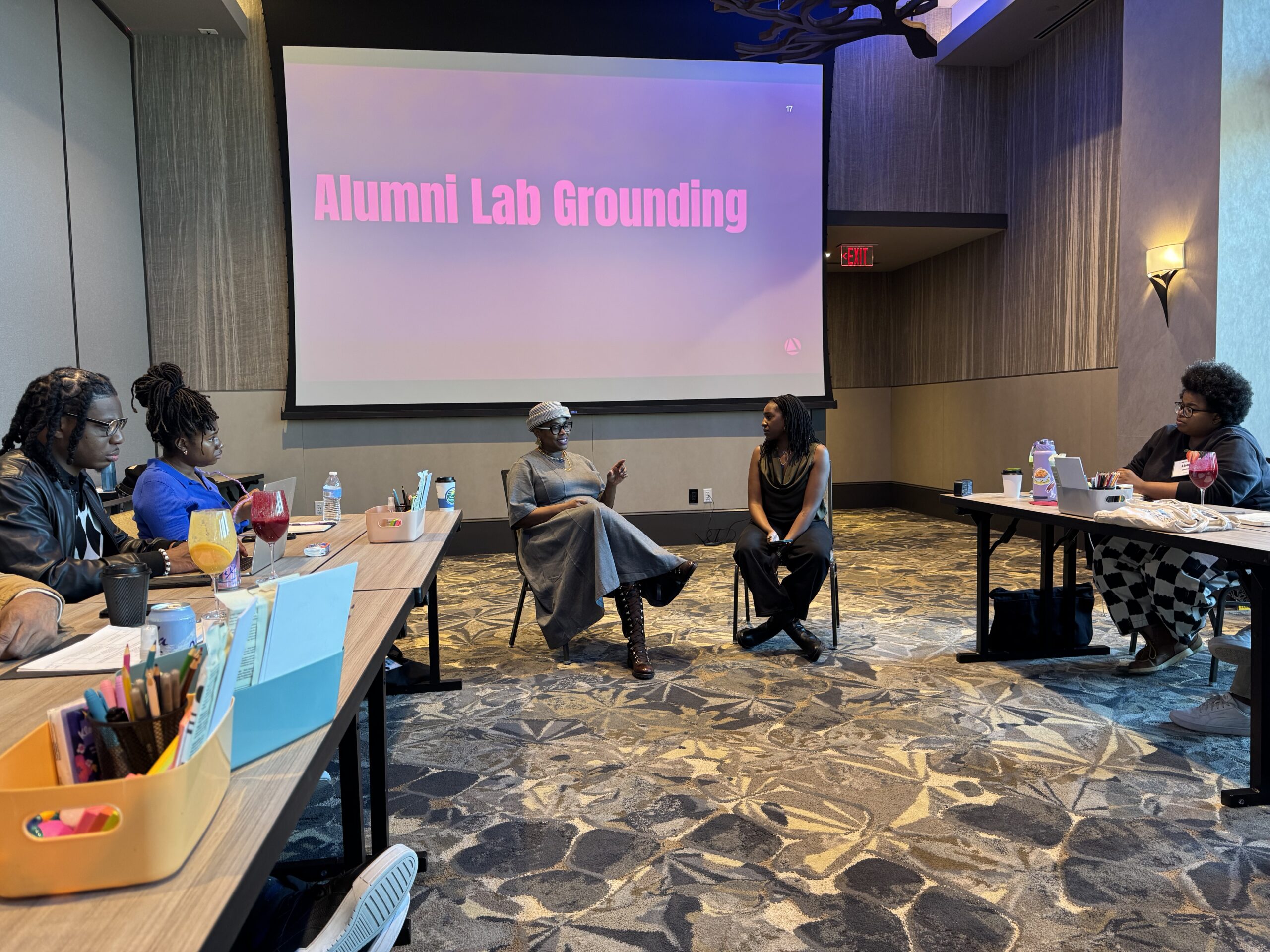
Holding back my own emotional responses, I was moved by the sometimes tearful, uniformly vulnerable admissions the men and women sitting around the u-shaped table configuration expressed while leaning into the exchange between Shiko and Tulaine. Several acknowledged the excruciating price their organizational leadership was putting on their roles as parents and caregivers, and still others offered feelings of disenfranchisement as citizens or residents of this country based on their accents or family origins.
Soon enough, I understood the sharing of life experiences, family histories, and even deeply-held traumas were nurtured organically by the emotional safety and aura of openness inherent within the curation of the program, even if the specific reactions weren’t foreseen.
From the first day, in addition to the morning chair massages and yoga, Alumni Lab leaders had the opportunity to “choose their own adventure,” whether it was solo relaxation time, the Beltline Tour with Trees Atlanta, or a sound bath.
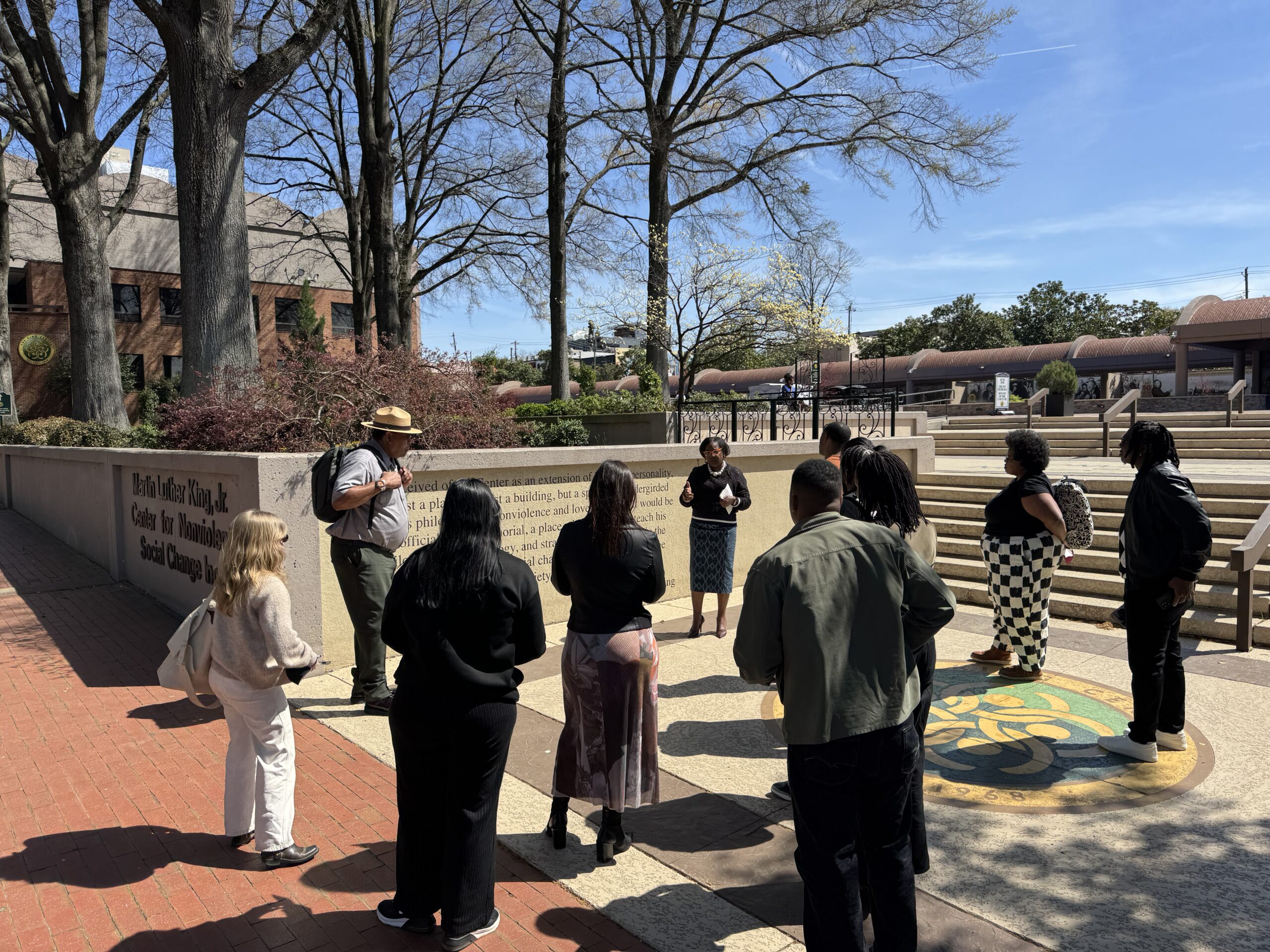
The recurring invitation for inner reflection and development was amplified the following day by Shari Davis, a master facilitator with deep experience in local government as well as past co-CEO of the Participatory Budget Project. She led a half-day conversation on grief and resilience in leadership.
“What are the leadership values our system(s) need right now?” she initially posed to the entrepreneurs. “What are some of the things holding each of you back as leaders?”
I was intrigued by how eagerly people took the opportunity of re-imagining not only their identities as entrepreneurs within organizations and movements, but also their entire lives. Davis’s questions spurred a robust conversation meant to challenge our group to consider how their respective leadership styles could transform, or better adapt to, the organizations and individuals they lead – or even within their own families!
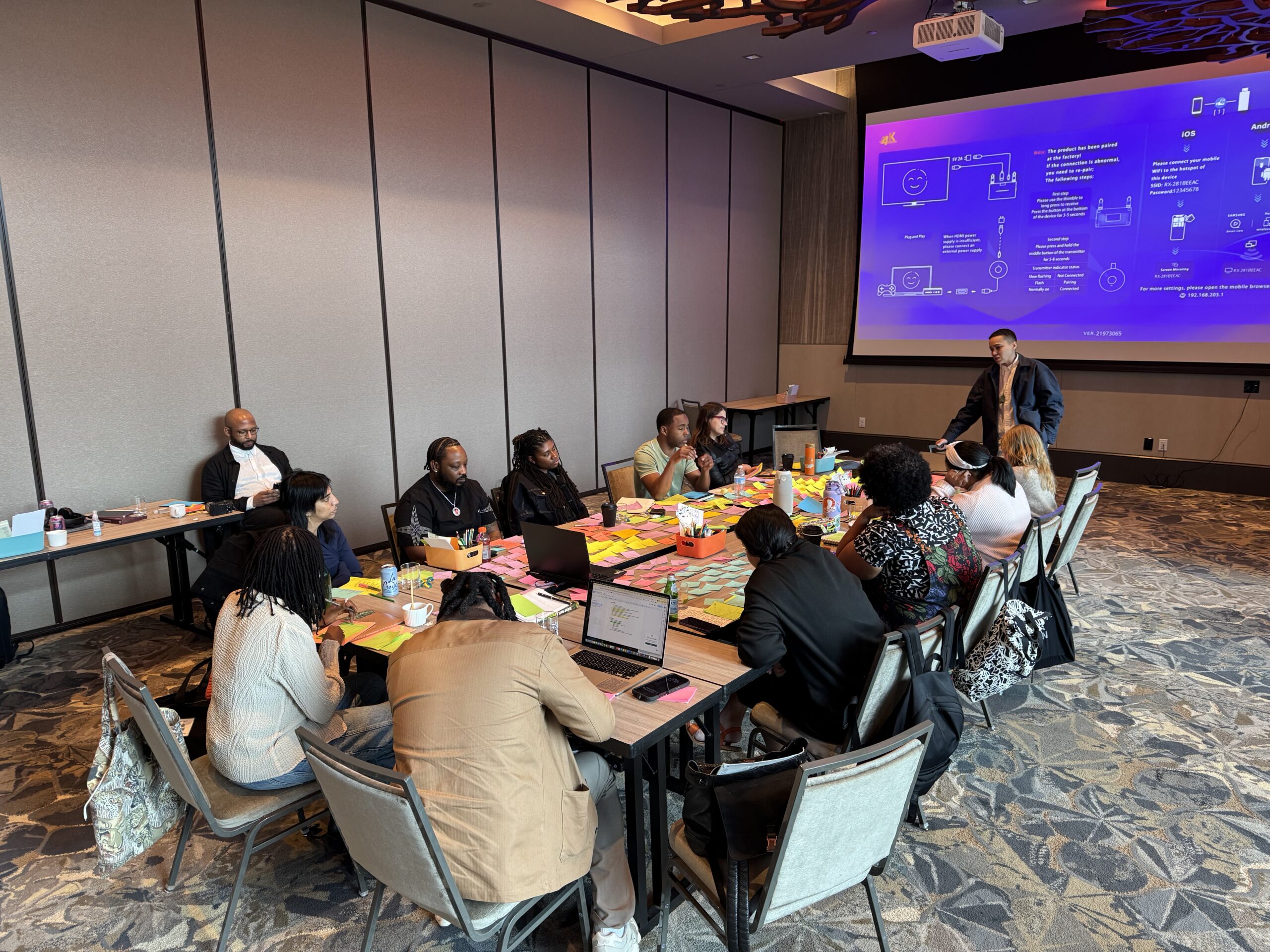
That evening, both Alumni Lab members and New Profit staff gathered at the two-year-old “Miss Conduck” restaurant in the Edgewood Avenue neighborhood for a buffet of Trinidadian dishes including oxtail stew, “Double-Doubles,” red snapper, and jerk chicken with peas and rice. The mother-daughter owners Emily James and LaToya Franklin came out during the rowdy dinner to greet everyone, ask for online reviews, and offer hugs to New Profit’s Kim Willette, whom they’d met during a prior convening in Atlanta several months before.
On our final morning together, Kathryn Peters used the “Three Horizons” framework originated by futurist Bill Sharpe to guide the Alumni Lab members toward defining the agenda for the cohort over the subsequent year, its meeting cadence, and the key challenges and needs they felt most critical to explore. Previously, I worked at the same firm in which Bill was a partner and know from firsthand experience how useful “Horizons” is at simplifying complexity and building vision alignment within groups.
Despite leading in a climate of perceived organizational and personal threat where funding and individual well-being are constantly depleted, there was a consensual desire to tell strategically bolder stories for impact and behavioral shift.
By the time the inaugural Alumni Lab gathering ended, though seen as an active observer, I left having established my own connections with more than a few of the social entrepreneurs from the one-to-one interactions during lunches, at the Caribbean dinner, or even bumping into folks on elevators! I left Atlanta that evening (despite a canceled flight) inspired by the profound authenticity and commitment which the social entrepreneurs brought to the convening. It was obvious they left fully bought into the experience.
Crisis, or the feeling of it, has a way of forcing us to check our egos at the door and show up fully as ourselves. Like the entrepreneurs in the Alumni Lab, I’d been to countless leadership trainings and facilitations before the one last month in Atlanta. To be honest, I typically leave feeling drained and worn down. This time, I didn’t.